Waking up at 3 AM and struggling to fall back asleep can be frustrating, especially when you feel tired but your mind suddenly becomes active. You might start thinking about work, family responsibilities or tomorrow’s plans — and the longer you lie awake, the harder it can feel to get back to sleep.
If this happens regularly, you may wonder whether stress, hormones, caffeine or a nutritional deficiency is responsible.
The reality is that waking up at 3 AM does not automatically indicate a specific health problem or nutrient deficiency. Sleep naturally becomes lighter at different points during the night, and brief awakenings are common. The more important questions are how often you wake up, how long you stay awake and whether you feel rested during the day.
This guide explores common reasons for waking during the night, practical ways to improve sleep continuity, when to seek medical advice and whether supplements may have a role.

Who this guide is for
This guide may help:
Adults who regularly wake between 2 AM and 4 AM
People who fall asleep easily but struggle to stay asleep
Those who wake with racing thoughts or worries
People exploring the effects of caffeine, alcohol or evening habits on sleep
Readers considering magnesium, L-theanine or other sleep supplements
Anyone wanting practical, evidence-based ways to improve sleep quality
This article is for general educational purposes only and is not a diagnosis or treatment plan.
Is waking up at 3 AM normal?
Yes, waking briefly during the night can be normal. Sleep is not a continuous, uninterrupted state. Throughout the night, the brain moves through different sleep stages, including lighter sleep, deeper sleep and REM sleep.
Brief awakenings can occur during transitions between these stages. You may turn over, adjust your bedding or wake for a moment before falling asleep again without remembering it the next morning.
The problem is more likely to deserve attention when you:
Stay awake for long periods after waking
Experience this pattern on many nights
Feel excessively tired during the day
Have difficulty concentrating or functioning normally
Wake repeatedly with symptoms such as gasping, pain or a need to urinate
The time on the clock is not usually the key issue. The frequency, duration and daytime impact of your awakenings matter more than whether they happen at exactly 3 AM.
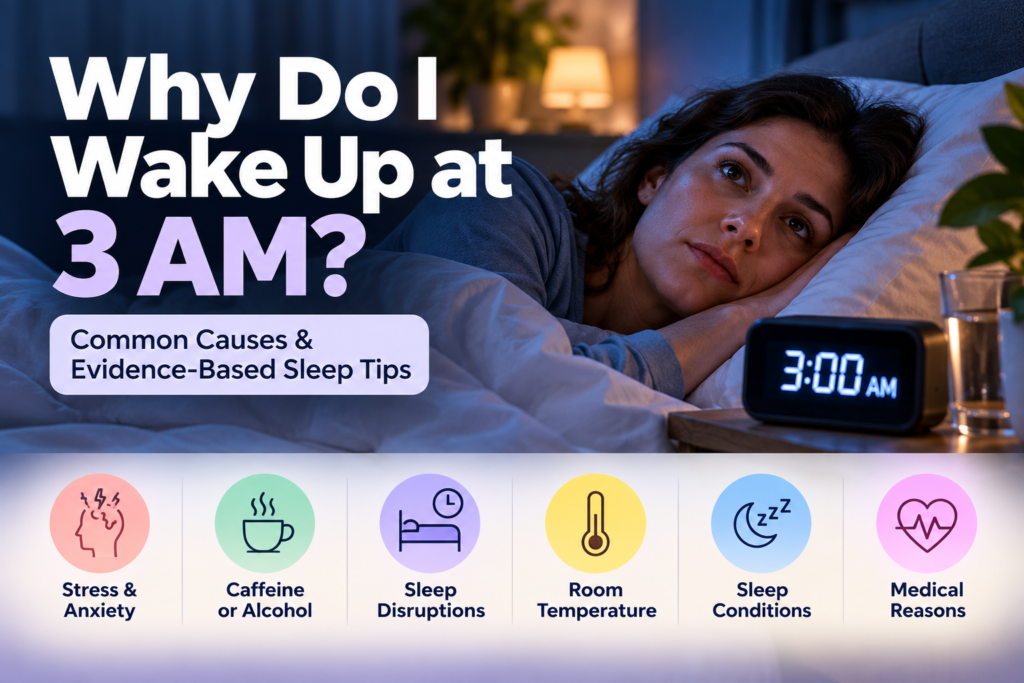
Why do I wake up at 3 AM? Common causes
Several factors can contribute to waking during the night. More than one may be involved.
1. Stress and anxiety
Stress is a common reason people struggle to stay asleep.
You may fall asleep because you’re physically tired, then wake later with thoughts about unfinished tasks, finances, relationships or upcoming responsibilities.
Stress can increase mental alertness and make it harder to settle again once you’re awake.
You might notice:
Replaying conversations or events
Thinking through tomorrow’s tasks
Feeling tense despite being tired
Checking the time repeatedly
Becoming anxious about not getting enough sleep
What may help: Build a short wind-down routine before bed. Writing down worries or tomorrow’s tasks earlier in the evening may help you avoid mentally rehearsing them when you wake.
If anxiety is persistent or significantly affecting your sleep, consider speaking with a GP or qualified mental health professional.
2. Caffeine consumed too late in the day
Caffeine is a stimulant that can interfere with sleep. Its effects can continue for several hours, although the duration varies between individuals.
Coffee is an obvious source, but caffeine is also found in:
Tea
Energy drinks
Cola
Some pre-workout products
Chocolate, in smaller amounts
Certain medicines
You may fall asleep without difficulty but still experience lighter or more disrupted sleep.
What may help: Try reducing caffeine later in the day and observe whether your sleep improves. People who are sensitive to caffeine may need to stop earlier than others.
Keep your caffeine intake and bedtime consistent for several days so you can identify patterns.
3. Alcohol before bed
Alcohol can make some people feel sleepy initially, but it can also disrupt sleep later in the night.
As its effects wear off, sleep may become more fragmented. Alcohol can also worsen snoring and certain breathing-related sleep problems.
If you regularly wake in the early hours after drinking in the evening, alcohol may be contributing.
What may help: Try avoiding alcohol close to bedtime and compare your sleep on alcohol-free evenings. Reducing alcohol may improve sleep quality as well as overall health.
4. Your sleep schedule or body clock
Your internal body clock helps regulate when you feel sleepy and alert. It is influenced by light exposure, activity, meals and regular sleep–wake timing.
If you go to bed unusually early, have an inconsistent schedule or frequently change your waking time, you may find yourself awake earlier than intended.
Shift work, travel and irregular routines can also affect sleep timing.
What may help:
Keep a reasonably consistent wake-up time.
Get natural daylight during the day, particularly in the morning.
Avoid frequent large changes to your bedtime.
Consider whether going to bed earlier than usual is contributing to early waking.
If you consistently wake very early and cannot return to sleep, a GP can help assess whether your sleep pattern or another issue needs attention.
5. Your bedroom is too hot, cold, noisy or bright
Environmental discomfort can interrupt sleep, even if you do not immediately recognise the cause.
Possible triggers include:
A room that becomes too warm overnight
Heavy bedding
Traffic or household noise
Streetlights or early morning sunlight
An uncomfortable mattress or pillow
Pets or other household disturbances
What may help: Keep your bedroom dark, quiet and comfortably cool. Consider blackout curtains, an eye mask or earplugs if light and noise are problems.
Small changes to the sleep environment may be more useful than adding another supplement.
6. Needing to urinate during the night
Waking to use the toilet can interrupt sleep. This may happen after drinking a large amount of fluid late in the evening, but it can also be associated with medication, bladder problems, diabetes or other medical conditions.
If you regularly wake several times to urinate, or notice a new or persistent change, discuss it with a healthcare professional.
What may help: Review the timing of evening fluids without deliberately restricting hydration excessively. If the problem continues, seek medical advice rather than assuming it is simply part of ageing.
7. Sleep apnoea or another sleep disorder
Some sleep disorders cause repeated awakenings without the person fully understanding why.
Obstructive sleep apnoea occurs when the airway repeatedly narrows or closes during sleep, disrupting normal breathing.
Possible signs include:
Loud, persistent snoring
Gasping, choking or pauses in breathing during sleep
Frequent waking
Morning headaches
Excessive daytime sleepiness
Restless legs syndrome and other sleep-related conditions can also interfere with sleep continuity.
If you suspect sleep apnoea, speak with your GP. It is important to identify and treat the underlying problem rather than relying on supplements.
8. Pain, reflux or other physical symptoms
Physical discomfort can make it difficult to remain asleep.
Examples include:
Back or joint pain
Acid reflux or heartburn
Hot flushes or night sweats
Coughing or breathing difficulties
Itching or other skin symptoms
If waking is associated with a recurring physical symptom, consider discussing it with a healthcare professional, particularly if it is new, worsening or affecting your daily life.
9. Hormonal changes
Hormonal changes can affect sleep in some people.
For example, perimenopause and menopause may be associated with hot flushes, night sweats and changes in sleep quality. Other health conditions and medications can also affect sleep.
It is important not to assume that waking at 3 AM automatically means you have a hormonal imbalance.
If your sleep changes alongside other persistent symptoms, a GP can help assess possible causes and suitable options.
Why do I wake up at 3 AM and struggle to fall back asleep?
Sometimes the initial awakening is brief, but the response to being awake keeps you up.
You might check the time, calculate how many hours remain before your alarm, worry about being tired tomorrow and try increasingly hard to force yourself back to sleep.
This can create a cycle:
Wake up → check the clock → worry about sleep → become more alert → struggle to fall asleep.
Sleep is not something you can force through effort alone. Becoming frustrated about being awake may make it harder to relax.
What to do when you wake up
Try these steps:
Avoid checking the time repeatedly. Turn the clock away if it encourages you to calculate how much sleep remains.
Keep the lights low. Avoid bright lights and stimulating activities.
Don’t force sleep. Focus on resting quietly rather than testing whether you’re asleep yet.
Get out of bed if you remain wide awake. Do something quiet and relaxing in dim light, such as reading a paper book. Return to bed when you feel sleepy.
Keep your usual wake-up time. Avoid repeatedly extending your time in bed to compensate for a difficult night.
For persistent insomnia, cognitive behavioural therapy for insomnia (CBT-I) is an evidence-based treatment. A GP can discuss appropriate options.
Does waking up at 3 AM mean you have high cortisol?
You may see claims online that waking at a particular time proves your cortisol is too high.
This is an oversimplification.
Cortisol follows a daily rhythm and is involved in the body’s normal wakefulness response. However, waking at 3 AM alone cannot diagnose high cortisol or a hormone disorder.
Stress can contribute to sleep disruption, but there are many other potential causes, including caffeine, alcohol, environmental disturbances and medical conditions.
If you have other symptoms that concern you, seek medical advice rather than trying to diagnose a hormone imbalance from your sleep pattern.
Does waking up at 3 AM mean you have a magnesium deficiency?
Magnesium contributes to normal muscle and nervous system function, which helps explain why it is often discussed in relation to relaxation and sleep.
However, waking at a particular time is not a reliable sign of magnesium deficiency. Evidence that magnesium supplements improve sleep in people who are not deficient is limited and inconsistent.
If you are considering magnesium, look at your overall diet, the amount of elemental magnesium in the product and any relevant medical conditions or medications.
Read our related guide: Best Magnesium for Sleep (UK).
Can supplements help you stay asleep?
Supplements are often marketed for uninterrupted sleep, but evidence varies considerably between ingredients. None should be assumed to solve repeated night waking without understanding its cause.
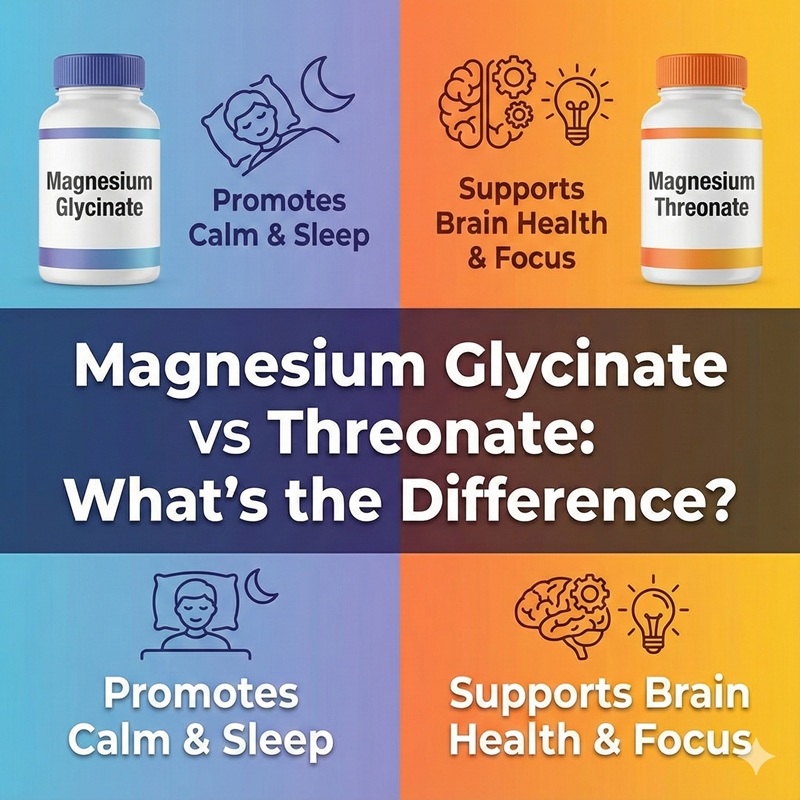
Magnesium
Magnesium is an essential mineral involved in normal muscle and nervous system function. Some people explore it as part of an evening routine, but evidence for treating insomnia or repeated waking is limited.
Browse Magnesium Supplements on Amazon UK ↗
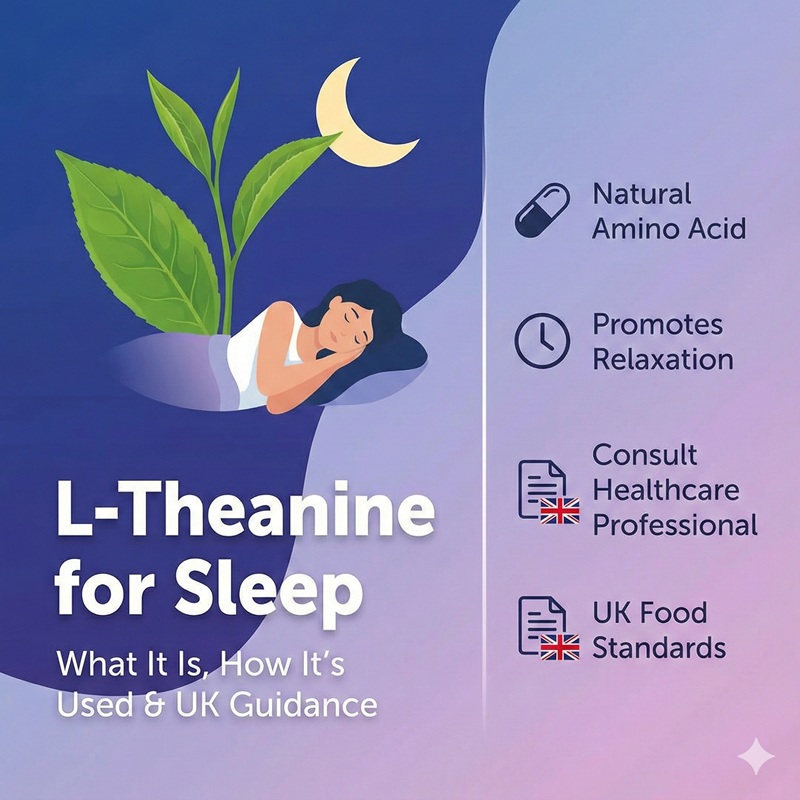
L-theanine
L-theanine is an amino acid found naturally in tea. It has been investigated for relaxation and sleep-related outcomes, but research is still limited and does not establish it as a treatment for insomnia.
Read our guide: L-Theanine for Sleep: What It Is, How It’s Used & UK Guidance.
Browse L-Theanine Supplements on Amazon UK ↗
Glycine
Glycine is an amino acid that has been investigated in small human studies involving sleep. Some studies reported improvements in subjective sleep quality, but the evidence remains preliminary.
It should not be described as a proven treatment for waking during the night.
Melatonin
Melatonin helps regulate the sleep–wake cycle and may be used for certain sleep problems under appropriate medical guidance.
In the UK, melatonin is generally prescription-only. It is not a routine over-the-counter sleep supplement. Speak with a GP or pharmacist if you think it may be appropriate for your circumstances.
Read our guide: Melatonin for Sleep (UK): Benefits, Dosage & NHS Guidance.
Important point
If you wake at 3 AM because of sleep apnoea, pain, reflux, medication effects or another medical issue, a supplement may not address the underlying cause.
A practical 7-day plan to improve sleep continuity
You don’t need to change everything at once. Try a consistent routine for a week and observe what happens.
| Day | Action | What to observe |
|---|---|---|
| Day 1 | Record your bedtime and wake-up time | Identify your usual pattern |
| Day 2 | Reduce late-day caffeine | Notice changes in restlessness |
| Day 3 | Avoid alcohol close to bedtime | Check whether sleep feels less fragmented |
| Day 4 | Make the bedroom darker and more comfortable | Look for environmental disturbances |
| Day 5 | Add a short wind-down routine | Notice whether you feel less mentally alert at bedtime |
| Day 6 | Keep your wake-up time consistent | Observe daytime sleepiness and sleep timing |
| Day 7 | Review your notes | Identify patterns worth continuing |
This is a self-observation exercise, not a diagnostic test. If you have persistent or severe sleep problems, don’t delay seeking medical advice while trying lifestyle changes.
When should you see a GP?
Consider contacting your GP if:
You regularly wake during the night and struggle to return to sleep.
Sleep problems have continued for months or are affecting everyday life.
You experience severe daytime tiredness or difficulty concentrating.
You snore loudly, gasp or appear to stop breathing during sleep.
You wake with persistent pain, reflux, night sweats or other symptoms.
You suspect medication is affecting your sleep.
Seek urgent medical help for severe or sudden symptoms, such as significant difficulty breathing or chest pain.
A GP can assess your symptoms, review medication and consider whether further investigation or treatment is needed.
Frequently Asked Questions
Why do I wake up at exactly 3 AM every night?
There is no single explanation for waking at the same time each night. Your sleep schedule, environmental conditions, stress, alcohol, caffeine or a medical issue may contribute. The time itself does not identify the cause.
Is waking up at 3 AM a sign of anxiety?
It can be associated with stress or anxiety, particularly if you wake with racing thoughts or feel alert and worried. However, night waking has many possible causes, so it should not automatically be attributed to anxiety.
Why do I wake up at 3 AM and feel wide awake?
You may have become alert after a normal sleep-stage transition, or something may have disrupted your sleep. Stress, caffeine, alcohol, an irregular sleep schedule and environmental disturbances can all contribute.
Does waking at 3 AM mean my cortisol is high?
No. Waking at a particular time does not establish that your cortisol is high. If you have other symptoms that concern you, speak with a healthcare professional.
Should I take magnesium if I wake up during the night?
Not necessarily. Magnesium is an essential nutrient, but waking at night does not prove you have a deficiency. Consider your diet and medical circumstances, and seek professional advice if you are unsure whether supplementation is appropriate.
Can L-theanine help me stay asleep?
L-theanine has been studied for relaxation and sleep-related outcomes, but evidence remains limited. It is not an established treatment for persistent night waking or insomnia.
Should I get out of bed if I wake at 3 AM?
If you remain wide awake and become frustrated, getting out of bed briefly to do something quiet in dim light may help. Return when you feel sleepy. Avoid bright screens and repeatedly checking the time.
Is waking up during the night part of ageing?
Sleep patterns can change with age, but persistent night waking should not automatically be dismissed as normal ageing. Medication, pain, urinary symptoms, sleep apnoea and other conditions may contribute.
Final thoughts
Waking up at 3 AM can be frustrating, but it does not automatically mean something is wrong with your hormones, magnesium levels or health.
The most useful first step is to identify the pattern behind your waking. Look at caffeine, alcohol, stress, your sleep schedule, bedroom conditions and any symptoms that occur alongside the awakening.
Supplements such as magnesium, L-theanine and glycine are often discussed in sleep routines, but their evidence varies and they are not guaranteed to prevent night waking. If you experience persistent insomnia, significant daytime tiredness or signs of a sleep disorder, speak with a GP rather than relying on supplements alone.
For more evidence-based sleep guidance, explore: