Light coming through the curtains, traffic outside or a partner moving around at night can make it harder to get comfortable and stay asleep. Sometimes, improving your sleep environment is a more practical first step than adding another supplement to your routine.
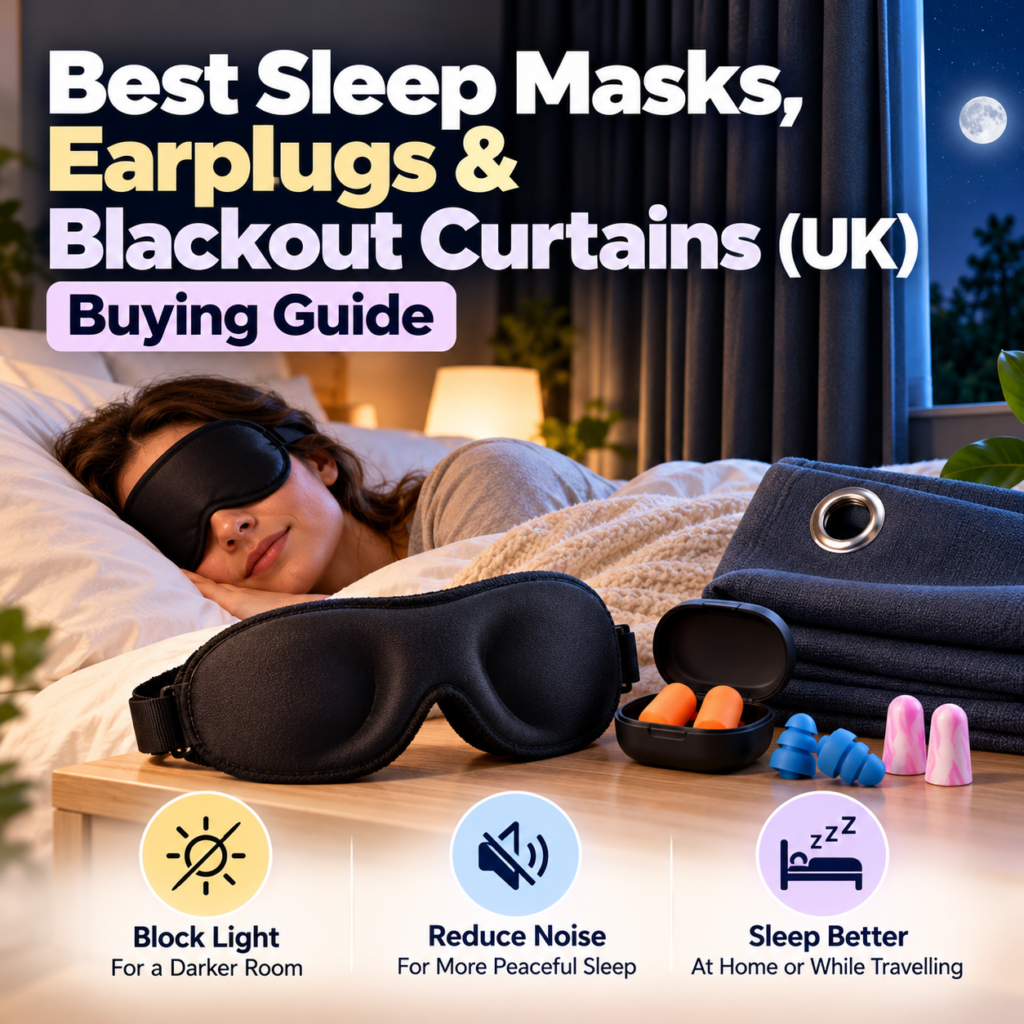
Sleep masks, earplugs and blackout curtains are three simple options for reducing common bedroom disturbances. Each works differently: sleep masks cover the eyes, earplugs reduce the sound reaching your ears, and blackout curtains limit outside light entering the room.
But which option is worth buying? The answer depends on what is disturbing your sleep, your comfort preferences and your bedroom setup.
This guide compares the main types, explains what to look for when shopping in the UK, and highlights the features that matter more than marketing claims.

Who this guide is for
This guide may be useful for:
Adults who struggle to sleep in a bright bedroom
People disturbed by traffic, neighbours or household noise
Shift workers who need to sleep during daylight hours
Travellers who want a more comfortable sleep setup
Light sleepers sharing a bedroom
Anyone looking for practical, non-supplement ways to improve their sleep environment
These products can reduce environmental disturbances, but they cannot treat every cause of insomnia or repeated night waking.
How light and noise affect sleep
Your sleep environment can influence how easily you fall asleep and how often you wake.
Light
Light exposure helps regulate your body’s internal clock. Bright light at the wrong time can interfere with your usual sleep schedule, while a dark bedroom can make it easier to create a consistent night-time environment.
A sleep mask may be sufficient if light reaches your eyes directly. Blackout curtains may be more useful when streetlights, security lights or early morning sunshine illuminate the entire room.
Noise
Unwanted sounds can disturb sleep, particularly when they are sudden, irregular or loud. Traffic, barking dogs, neighbours and household activity may all contribute.
Earplugs can reduce the sound reaching your ears, although they do not block every sound and should not be expected to eliminate noise completely.
The most useful first step is to identify your main disturbance: light, noise or both.
Best sleep masks, earplugs and blackout curtains: at a glance
| Product type | Best suited to | Main advantage | Potential drawback | Where to buy |
|---|---|---|---|---|
| Contoured sleep mask | People bothered by light around the eyes | Can reduce pressure on the eyelids | Fit varies by face shape | Amazon UK ↗ |
| Soft fabric sleep mask | Travel and occasional use | Lightweight and easy to pack | May let light in around the nose | Amazon UK ↗ |
| Reusable silicone earplugs | People who prefer reusable earplugs | Can be moulded or fitted according to the design | Fit and hygiene require attention | Amazon UK ↗ |
| Soft foam earplugs | General noise reduction | Many designs expand to fit the ear canal | Incorrect insertion can reduce effectiveness | Amazon UK ↗ |
| Blackout curtains | Bright bedrooms and early morning light | Covers a large window area | Installation and edge gaps affect results | Amazon UK ↗ |
| Blackout curtain liners | Existing curtains that let in light | May improve light blocking without replacing curtains | Results depend on the existing setup | Amazon UK ↗ |
These are product categories rather than verified rankings of individual products. Check current prices, dimensions, customer reviews and specifications before buying.
1. Sleep masks: a simple way to reduce light
A sleep mask covers the eyes to reduce the light reaching them. It can be a convenient option if you sleep in a room with streetlights, early morning sunshine or other sources of unwanted light.
Sleep masks are also easy to pack, making them useful for hotel rooms, flights and other unfamiliar sleeping environments.
Types of sleep masks
Soft fabric masks
These are usually lightweight and flexible. They may suit people who want a simple, inexpensive option for home or travel.
Contoured sleep masks
Contoured designs create space around the eyes rather than pressing fabric directly against the eyelids. They may be more comfortable for some people, particularly those who dislike pressure around their eyes.
Adjustable sleep masks
Adjustable straps help you change the fit. A secure fit matters because a mask that shifts during the night may allow light in.
What to look for when buying a sleep mask
Light blocking: Check whether the design covers the area around the nose, where light often enters.
Comfort: Look for soft materials and a shape that suits your face.
Strap adjustment: A secure but comfortable fit can help prevent the mask from slipping.
Breathability: Consider whether the material may feel warm against your skin.
Cleaning: Check whether the mask is machine-washable or can be cleaned easily.
Potential drawbacks
Some masks feel restrictive, become warm or put unwanted pressure on the eyes. If you have sensitive skin or an eye condition, choose carefully and seek professional advice if you are unsure whether a particular design is suitable.
Browse sleep masks on Amazon UK: View sleep mask options ↗
2. Earplugs for sleeping: reducing unwanted noise
Earplugs fit into or cover the entrance to the ear canal to reduce the sound reaching the ear. They may be useful if you are disturbed by traffic, neighbours, snoring or other environmental noise.
However, earplugs differ in material, fit and noise-reduction performance.
Types of sleeping earplugs
Foam earplugs
Foam earplugs typically expand after insertion to fit the ear canal. They are widely available, but they must be inserted correctly to provide their intended level of noise reduction.
Reusable silicone earplugs
Some silicone designs fit into the outer ear, while others use a different shape. Check the manufacturer’s instructions because not all silicone earplugs are inserted in the same way.
Flanged or filtered earplugs
These designs may offer a more structured fit or a different listening experience. Their performance depends on the specific product and its fit.
What to look for when buying earplugs
Noise Reduction Rating or SNR: Check the stated rating and the testing standard used. A higher rating generally indicates greater potential noise reduction under test conditions, but real-world protection depends heavily on fit.
Comfort: Earplugs should fit securely without causing pain.
Material: Consider skin sensitivity and whether the product is intended for single or repeated use.
Hygiene: Follow cleaning and replacement instructions.
Ease of use: Choose a design you can insert or fit correctly.
Are earplugs safe to use every night?
Some people use suitable earplugs regularly, but hygiene and fit matter. Poorly fitting or dirty earplugs may irritate the ear canal or contribute to problems such as wax build-up.
Do not push earplugs deeply into the ear. Stop using them if they cause pain, discharge or irritation, and seek advice if symptoms persist.
Earplugs can also make alarms, a child’s cry or other important sounds harder to hear. Consider alternative alerting arrangements if you need to remain responsive overnight.
Browse sleeping earplugs on Amazon UK: View sleep earplug options ↗
3. Blackout curtains: for bright bedrooms and early mornings
Blackout curtains are designed to reduce the amount of light entering through a window. They may be particularly useful if you sleep during daylight hours, have bright streetlights outside or wake when the sun rises.
Unlike a sleep mask, curtains cover the window rather than your eyes. They can also help create a darker environment for anyone sharing the room.
What to look for when buying blackout curtains
Light-blocking performance
The term “blackout” does not always mean a room will become completely dark. Light may still enter around the sides, top or bottom of the curtain.
Curtain dimensions
Measure your window and consider how much the curtain overlaps the frame. Wider and longer coverage can help reduce gaps.
Lining and fabric
Some curtains use a dedicated blackout lining, while others use dense or layered fabrics. Check the manufacturer’s description and customer photos.
Installation
A suitable pole or track, along with enough overlap around the window, can make a difference to the final result.
Care and maintenance
Check washing instructions, fabric weight and whether the curtain is compatible with your existing fittings.
Blackout curtains vs blackout liners
Blackout curtains may be a good choice if you are replacing your window coverings. If you already have curtains you like, a separate blackout liner may be a more practical alternative.
The effectiveness of either option depends on the material, window coverage and installation.
Browse blackout curtains on Amazon UK: View blackout curtain options ↗
Which should you buy: a sleep mask, earplugs or blackout curtains?
The best starting point is the source of the disturbance.
| Your main problem | Option to consider first | Why |
|---|---|---|
| Streetlights or light through the curtains | Sleep mask | A simple way to block light reaching your eyes |
| Bright sunshine entering the whole room | Blackout curtains | Covers a larger area and reduces incoming daylight |
| Traffic or neighbour noise | Suitable earplugs | Can reduce the sound reaching your ears |
| Both light and noise | Sleep mask plus earplugs | Addresses two separate environmental disturbances |
| Daytime sleep after night shifts | Blackout curtains, potentially with a sleep mask | Helps reduce daylight entering the room |
| Frequent waking despite a dark, quiet room | Investigate other causes | Environmental products may not address the underlying issue |
There is no need to buy all three products at once. Start with the one that addresses your biggest disturbance and see whether it makes a meaningful difference.
Can sleep masks, earplugs and blackout curtains improve sleep quality?
They can help when unwanted light or noise is disrupting your sleep. Research into sleep environments supports the importance of reducing disruptive light and noise, particularly in settings where environmental disturbance is substantial.
However, the benefits depend on the situation. Someone sleeping in a quiet, dark bedroom may notice little difference from adding these products.
They are also not treatments for every sleep problem. If you wake repeatedly because of pain, reflux, anxiety, sleep apnoea or another health issue, blocking light and noise may not resolve the cause.
For broader sleep advice, read our guide to Best Sleep Supplements (UK): Evidence-Based Options & What to Know.
How to create a better sleep environment on a budget
You do not necessarily need expensive sleep products to make your bedroom more comfortable.
Try these practical steps:
Identify the main disturbance. Notice whether light, noise, temperature or an inconsistent routine is the biggest problem.
Reduce avoidable light. Close curtains fully and remove unnecessary light sources.
Reduce avoidable noise. Address rattling windows or doors where possible, and consider suitable earplugs if appropriate.
Keep the room comfortable. Aim for a temperature and bedding setup that help you avoid becoming too hot or cold.
Keep your sleep schedule consistent. Regular wake-up times can help reinforce your body’s sleep–wake rhythm.
Review the results. Give one change several nights and note whether you fall asleep more easily or wake less often.
If you work night shifts, remember that light exposure also influences your body clock. A dark bedroom may help with daytime sleep, but managing shift-work sleep can require a broader routine.
When should you seek help for sleep problems?
Sleep masks, earplugs and blackout curtains are practical environmental tools, but persistent sleep difficulties may need further assessment.
Consider speaking with a GP if:
Sleep problems continue for months or significantly affect daily life.
You feel excessively sleepy during the day.
You snore loudly, gasp or experience pauses in breathing during sleep.
You regularly wake with pain, breathing difficulties or other persistent symptoms.
Anxiety or low mood is affecting your sleep.
A healthcare professional can help identify possible causes and discuss appropriate treatments.
Frequently Asked Questions
Are sleep masks worth buying?
They may be worth considering if light entering your bedroom or reaching your eyes is disturbing your sleep. Comfort, fit and light leakage around the nose are important factors.
Are earplugs safe to wear every night?
Suitable earplugs may be used regularly when fitted and maintained correctly. Follow the manufacturer’s instructions, keep reusable products clean and stop if you experience pain or irritation.
Do blackout curtains make a bedroom completely dark?
Not necessarily. Light can enter around the edges, above or below the curtain. Correct measurements, sufficient overlap and suitable installation can improve coverage.
Which is better: a sleep mask or blackout curtains?
A sleep mask is generally easier to use and transport. Blackout curtains cover a larger area and may be more practical for a bright bedroom. Your main source of light determines which is likely to be more useful.
Can I use earplugs and a sleep mask together?
Yes, many people use both to reduce light and noise. Make sure each product is comfortable and suitable for you, and consider how you will hear important alarms or respond to sounds overnight.
What are the best earplugs for sleeping with a snoring partner?
Comfort and fit are important, but no earplug blocks every sound. Compare the product’s stated noise-reduction performance and choose a design you can fit correctly. If a partner’s snoring includes gasping or pauses in breathing, encourage them to seek medical advice.
Are blackout curtains useful for shift workers?
They can help reduce daylight entering the room during daytime sleep. A sleep mask may provide additional coverage, although shift-work sleep can also depend on work schedules, light exposure and consistent routines.
Can these products cure insomnia?
No. They can reduce environmental disturbances but do not treat every cause of insomnia. Persistent sleep problems may require assessment and evidence-based treatment.
Final thoughts
Sleep masks, earplugs and blackout curtains are practical options for people whose sleep is disrupted by light or noise. Each serves a different purpose, so the most useful purchase depends on your bedroom and the problem you are trying to solve.
Start with the simplest change that addresses your main disturbance. Choose a comfortable mask if light reaches your eyes, suitable earplugs if noise is the issue, or blackout curtains if daylight enters around your windows. Combining products may help when both light and noise are disruptive.
If you continue waking frequently despite having a comfortable, dark and quiet bedroom, consider other causes and seek medical advice when appropriate.
For more evidence-based sleep guidance, explore: