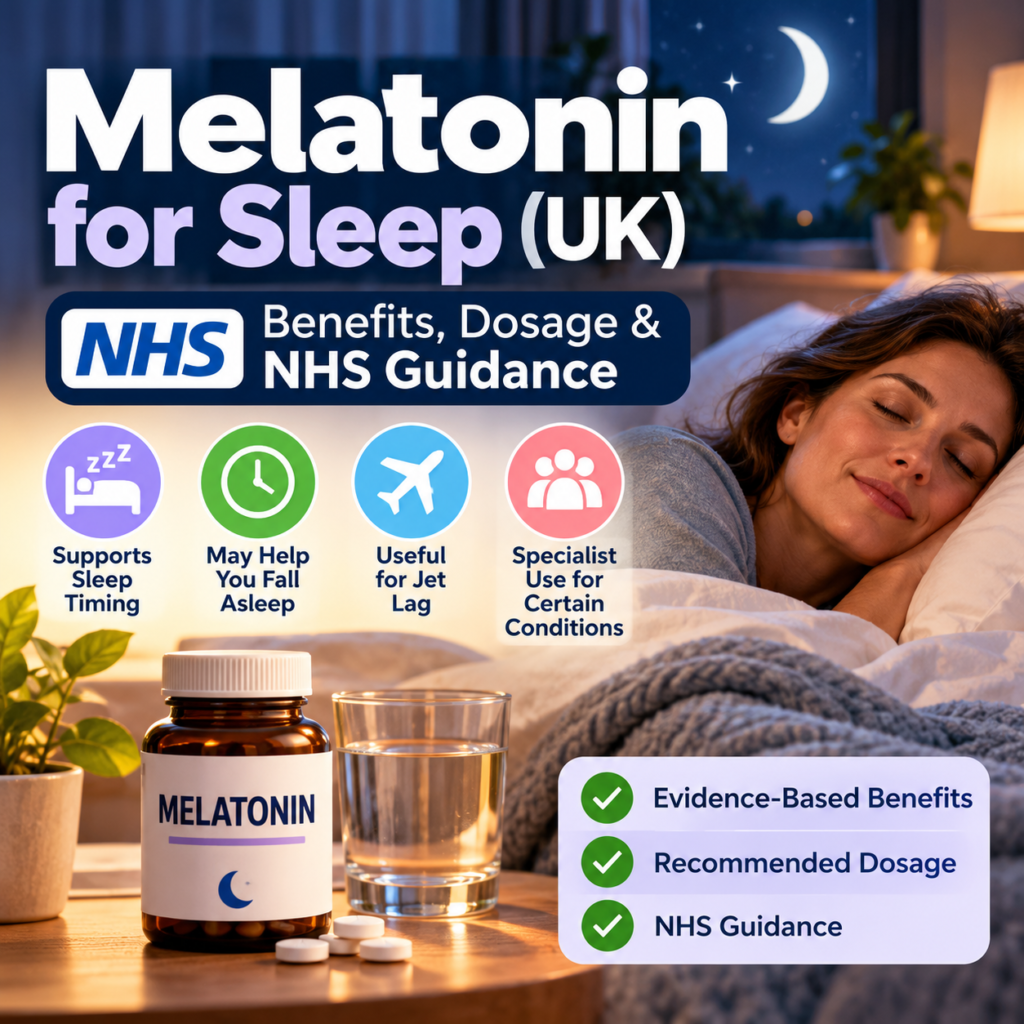
Melatonin is often called the “sleep hormone” because it helps regulate the body’s internal sleep–wake timing. It is widely discussed by people who struggle to fall asleep, experience jet lag or find that their sleep schedule has become disrupted.
But is melatonin suitable for everyday sleep problems in the UK? What does NHS guidance say about dosage, and can you buy melatonin supplements over the counter?
The answers depend on your age, circumstances and the reason for taking it. In the UK, melatonin is generally a prescription-only medicine, rather than a routine over-the-counter supplement. Its use is different from that of nutrients such as magnesium or amino acids such as L-theanine.
This guide explains how melatonin works, what the evidence says, UK prescribing guidance, potential side effects and alternatives to consider for better sleep.

Who this guide is for
This guide may be useful for:
UK adults researching melatonin for sleep
People who have difficulty falling asleep
Travellers interested in jet lag and changes in time zones
People whose sleep schedule is disrupted
Parents seeking reliable information about melatonin for children
Readers comparing melatonin with non-prescription sleep supplements
This article is for general educational purposes only. It does not recommend starting melatonin without appropriate medical advice.
What is melatonin?
Melatonin is a hormone produced mainly by the pineal gland in the brain. Its production is influenced by light and darkness.
Levels generally rise in the evening as it gets dark and fall towards morning. This helps signal to the body that it is time for its usual night-time period.
Melatonin is involved in regulating the body’s circadian rhythm, often called the internal body clock.
It is important to distinguish between two related concepts:
Sleepiness: how ready you feel to fall asleep.
Sleep timing: when your body is biologically prepared for sleep.
Melatonin is particularly relevant to sleep timing. It is not simply a conventional sedative, and taking more does not necessarily mean you will sleep better.
What does melatonin do?
Melatonin helps regulate the timing of the sleep–wake cycle. Prescription melatonin may be used in certain circumstances when sleep timing or sleep difficulties need medical management.
It has been studied and used in relation to:
Certain sleep difficulties in older adults
Delayed sleep timing in selected circumstances
Jet lag
Some sleep disorders in children and adolescents under specialist guidance
The evidence and recommendations differ by condition, age and formulation. Melatonin is not appropriate for every person who has trouble sleeping.
Melatonin benefits: what does the evidence say?
1. Falling asleep
Melatonin may help some people fall asleep more quickly, particularly in circumstances where their sleep timing is misaligned with their internal body clock.
However, its benefits for routine insomnia are generally modest, and it is not a universal solution for difficulty sleeping.
For persistent insomnia, cognitive behavioural therapy for insomnia (CBT-I) is an important evidence-based treatment. Sleep habits and underlying causes should also be considered.
2. Jet lag
Jet lag occurs when travelling across time zones disrupts the body’s internal clock.
Melatonin has been studied for helping people adjust to new time zones. Its potential usefulness depends on factors such as travel direction, the number of time zones crossed and the timing of administration.
Timing matters: taking melatonin at an unsuitable time may not produce the intended effect. Travellers should seek advice from a pharmacist or clinician rather than guessing the dose and timing.
3. Sleep difficulties in older adults
Melatonin production and sleep patterns can change with age. Modified-release prescription melatonin may be prescribed for certain adults aged 55 and over with short-term primary insomnia, subject to clinical assessment and UK prescribing guidance.
This does not mean everyone over 55 should take melatonin. A clinician should consider the cause of the sleep problem, other medicines and the expected benefit.
4. Children and young people
Melatonin may be prescribed in selected circumstances for children and adolescents, including certain sleep difficulties associated with neurodevelopmental conditions. This requires appropriate medical assessment and supervision.
It should not be given to a child simply because they have difficulty settling at bedtime without professional advice.
Important limitation
Melatonin should not be described as a proven treatment for every type of insomnia, anxiety-related sleep problem or long-term sleep disturbance.
NHS guidance: can you buy melatonin in the UK?
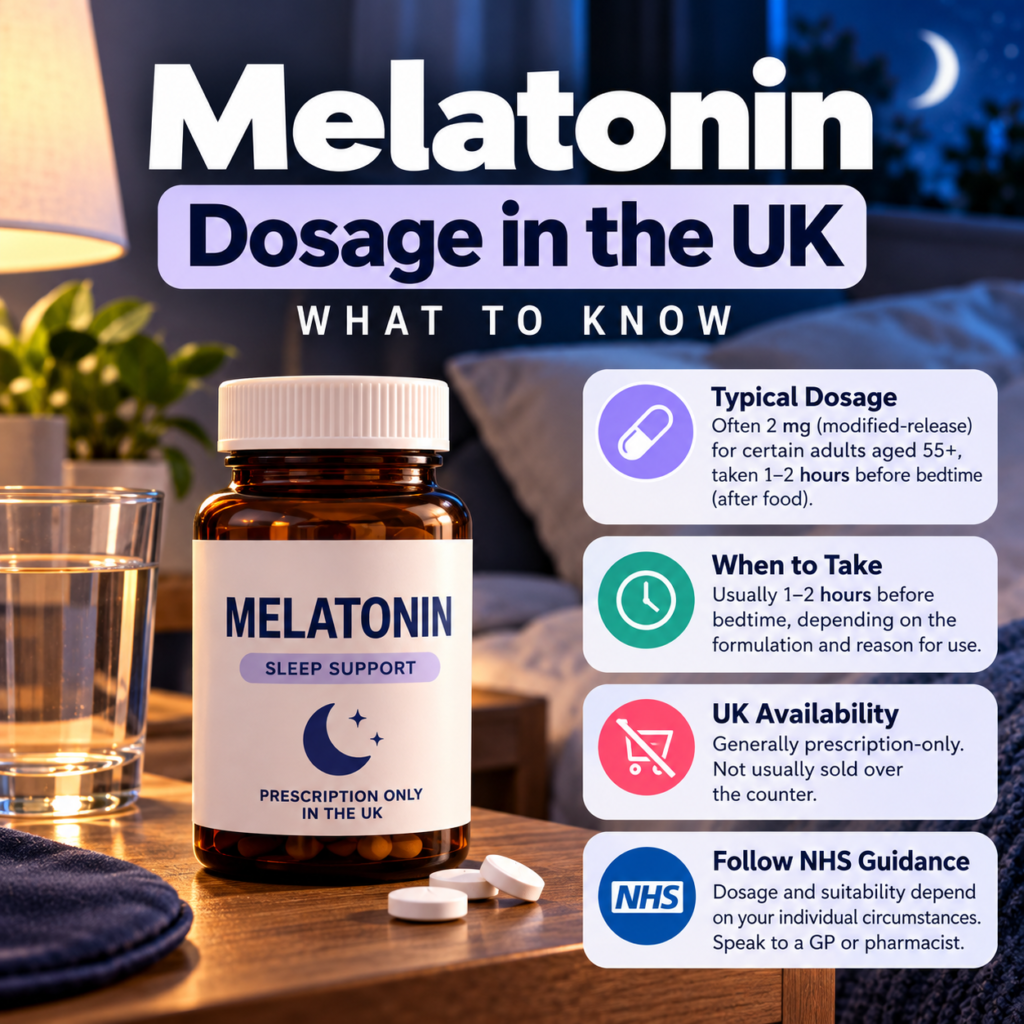
Melatonin is generally available in the UK on prescription. It is not normally sold as a standard over-the-counter medicine in the same way as some vitamins or minerals.
A GP or another qualified prescriber may consider it when clinically appropriate.
NHS guidance explains that melatonin may be prescribed for certain sleep problems, with the appropriate formulation, dose and duration depending on the individual’s circumstances.
What about melatonin sold online?
Some overseas websites and marketplaces advertise melatonin tablets or gummies as dietary supplements. Their availability does not mean that the products have the same legal status, quality controls or prescribing safeguards as medicines supplied through the UK healthcare system.
When considering any online product, check its regulatory status and source. Do not assume that an overseas supplement is equivalent to a UK-prescribed medicine.
For current information, consult the NHS melatonin guidance and discuss your circumstances with a GP or pharmacist.
Melatonin dosage in the UK
There is no single melatonin dose suitable for everyone.
The dose depends on factors such as:
The reason it is being prescribed
Age
Immediate-release versus modified-release formulation
Other medicines
Medical history
The timing required for the intended effect
For some adults aged 55 and over with short-term primary insomnia, UK prescribing information for a particular modified-release formulation uses a starting dose of 2 mg once daily, taken 1–2 hours before bedtime, after food. This is a formulation-specific prescribing example, not a general recommendation for everyone.
Other indications and formulations may use different instructions.
Why you should not choose a dose based on online advice
A dose that is used for one condition may not be appropriate for another. The timing of melatonin can be as important as the amount taken.
If melatonin has been prescribed to you, follow the directions on your prescription and patient information leaflet. Do not increase the dose, change the timing or combine products without checking with your prescriber or pharmacist.

Immediate-release vs modified-release melatonin
Melatonin products can have different release characteristics.
| Feature | Immediate-release | Modified-release |
|---|---|---|
| Release pattern | Releases the active ingredient relatively quickly | Releases it over a longer period |
| Main consideration | Formulation and timing affect suitability | Designed to provide a more prolonged release |
| Appropriate use | Depends on the indication and prescription | Depends on the indication and prescription |
| Can they be swapped? | Not automatically | Not automatically |
These formulations are not interchangeable simply because both contain melatonin. Use the formulation prescribed for you.
Melatonin vs magnesium for sleep
Melatonin and magnesium are very different.
Melatonin is a hormone involved in the timing of the sleep–wake cycle. Magnesium is an essential mineral that contributes to normal muscle and nervous system function.
| Feature | Melatonin | Magnesium |
|---|---|---|
| Type | Hormone | Essential mineral |
| Main role relevant to sleep | Helps regulate circadian timing | Supports normal muscle and nervous system function |
| UK access | Generally prescription-only | Widely available as a supplement |
| Evidence for sleep | Depends on the sleep problem and formulation | Evidence for improving sleep is limited and varies |
| Everyday use | Follow clinical prescribing advice | Consider dietary intake and supplement safety |
| Main caution | Drowsiness, interactions and suitability | Excess supplemental intake can cause adverse effects |
Neither should automatically be treated as the best option for everyone. The right approach depends on what is causing the sleep problem.
Read our related guide: Best Magnesium for Sleep (UK).
Melatonin vs L-theanine for sleep
L-theanine is an amino acid found naturally in tea and sold in some countries as a dietary supplement. It has been investigated for potential effects on relaxation and sleep-related outcomes, but the human evidence remains limited.
| Feature | Melatonin | L-theanine |
|---|---|---|
| Type | Hormone | Amino acid |
| Main research interest | Sleep–wake timing | Relaxation, attention and sleep-related outcomes |
| UK status | Generally prescription-only | Sold in supplement products |
| Evidence | Depends on indication; used for certain sleep problems | Preliminary and limited for sleep benefits |
| Suitable for self-treatment of persistent insomnia? | Seek medical advice | Not an established insomnia treatment |
L-theanine should not be considered a substitute for prescribed melatonin or professional assessment.
Read our guide: L-Theanine for Sleep: What It Is, How It’s Used & UK Guidance.
Potential side effects of melatonin
Melatonin can cause side effects, although not everyone experiences them.
Possible side effects include:
Daytime sleepiness or drowsiness
Headache
Dizziness
Nausea
Stomach discomfort
Unusual dreams
The risk may depend on the dose, formulation, timing and individual sensitivity.
Driving and operating machinery
If melatonin makes you sleepy, dizzy or less alert, do not drive, cycle or operate machinery. Follow the warnings on your medicine leaflet and seek advice if you are unsure how it affects you.
Who should seek medical advice before using melatonin?
Speak to a doctor or pharmacist before using melatonin if you:
Take prescription medicines or several supplements
Have liver or kidney problems
Have an autoimmune condition
Have epilepsy or another condition requiring regular medical care
Are pregnant or breastfeeding
Are considering it for a child or teenager
Experience persistent insomnia, significant daytime sleepiness or other ongoing symptoms
Melatonin can interact with medicines, including some that cause drowsiness and certain medicines that affect how it is processed in the body. A pharmacist can check your specific medicines for possible interactions.
How to improve sleep without relying on supplements
Good sleep habits can help support sleep, whether or not a clinician recommends medication.
Consider the following practical steps:
Keep a consistent wake-up time
Try to get up at a similar time each day, including weekends. Regular timing can help stabilise your sleep–wake rhythm.
Get daylight during the day
Exposure to natural daylight, particularly earlier in the day, can help reinforce your body clock.
Reduce caffeine later in the day
Caffeine can interfere with sleep even when consumed several hours before bedtime. Consider how sensitive you are and adjust your intake accordingly.
Create a comfortable bedroom
Keep your room dark, quiet and comfortably cool. Blackout curtains, an eye mask or earplugs may help if your environment is disruptive.
Use a wind-down routine
Choose a relaxing activity before bed, such as reading, taking a warm bath or doing gentle breathing exercises.
Seek help for ongoing insomnia
If sleep problems persist or affect your daily life, speak with a GP. They can assess possible causes and discuss evidence-based treatments, including CBT-I where appropriate.
Melatonin in the UK: key points at a glance
| Question | Short answer |
|---|---|
| Is melatonin a sleep hormone? | It is a hormone that helps regulate the sleep–wake cycle. |
| Can you buy melatonin over the counter in the UK? | It is generally prescription-only in the UK. |
| Is there one recommended dose for everyone? | No. Dose and timing depend on the indication and formulation. |
| Does melatonin work for everyone? | No. Benefits depend on the sleep problem and individual circumstances. |
| Can it cause side effects? | Yes, including drowsiness, headache and dizziness. |
| Is it suitable for children? | Only when appropriately prescribed and supervised. |
| Can it replace good sleep habits? | No. Sleep routines and assessment of underlying problems remain important. |
Frequently Asked Questions
Can I buy melatonin in the UK without a prescription?
Melatonin is generally prescription-only in the UK. Products advertised by overseas sellers may have a different regulatory status, so do not assume they are equivalent to medicines supplied through the UK healthcare system.
What is the NHS-recommended melatonin dose?
There is no single dose for everyone. The dose depends on the condition, formulation and individual circumstances. For one specific modified-release formulation used in some adults aged 55 and over with short-term primary insomnia, prescribing information uses 2 mg once daily, 1–2 hours before bedtime after food. This is not a general recommendation for all users.
Does melatonin help you fall asleep faster?
It may help some people, particularly when sleep timing is disrupted, but benefits vary. It is not a guaranteed solution for routine insomnia.
Is melatonin safe to take every night?
That depends on why it is being used, the formulation, the duration and the individual’s health. Follow the prescriber’s instructions and seek advice before continuing or changing treatment.
Does melatonin cause next-day drowsiness?
It can. If you feel sleepy, dizzy or less alert, avoid driving or operating machinery and seek advice if symptoms persist.
Is melatonin better than magnesium for sleep?
Neither is universally better. Melatonin affects sleep–wake timing, while magnesium is an essential mineral. The appropriate option depends on the underlying sleep problem, evidence and individual circumstances.
What should I do if I have insomnia every night?
Speak with a GP if sleep problems persist, affect daily life or are accompanied by symptoms such as loud snoring, gasping during sleep or severe daytime sleepiness. Assessment can help identify the cause and suitable treatment.
Final thoughts
Melatonin plays an important role in regulating the body’s sleep–wake cycle, and it may be useful in certain circumstances, including selected sleep problems and jet lag. However, it is not a universal solution for insomnia.
For UK readers, the most important point is that melatonin is generally prescription-only. Its dose, timing and formulation should be matched to the reason for use and the individual’s circumstances.
If you are struggling with sleep, start by considering your sleep schedule, caffeine intake, bedroom environment and any underlying health concerns. If the problem continues, speak with a GP or pharmacist rather than self-prescribing melatonin from an overseas website.
For more guidance, explore our related articles: