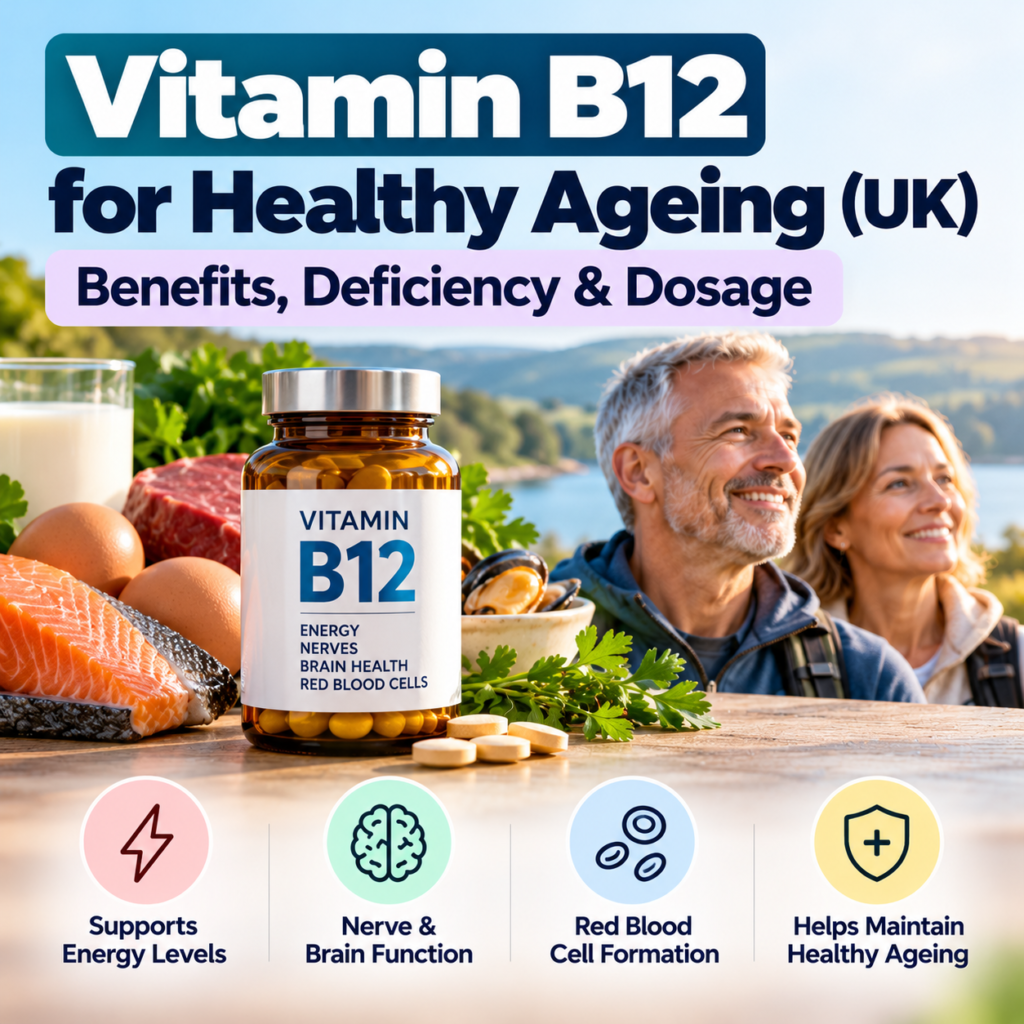
Vitamin B12 is an essential nutrient that supports normal nerve function, red blood cell formation and energy metabolism. As people get older, maintaining adequate B12 levels can become more important because some adults develop difficulty absorbing the vitamin from food.
But does vitamin B12 help slow ageing? Can supplements improve energy, memory or concentration? And how much do adults need in the UK?
The answer depends largely on whether you are getting enough vitamin B12 already. Correcting a deficiency is important for health, but taking additional B12 has not been shown to reverse ageing or reliably improve energy and memory in people who already have adequate levels.
In this guide, we explain the benefits of vitamin B12, who may be at risk of deficiency, UK dosage guidance, food sources and what to consider when choosing a supplement.

Who this guide is for
This guide may be useful for:
Adults interested in vitamins for healthy ageing
People aged 50 and over who want to understand vitamin B12 absorption
Vegetarians and vegans looking for reliable B12 sources
Adults experiencing unexplained tiredness or concerns about B12 deficiency
People comparing vitamin B12 tablets, capsules and other supplement formats
Readers exploring evidence-based approaches to healthy ageing and longevity
This article is for general educational purposes only. Symptoms associated with vitamin B12 deficiency can have other causes and should not be self-diagnosed.
What is vitamin B12?
Vitamin B12, also called cobalamin, is a water-soluble vitamin that the body needs for several essential functions.
It contributes to:
Normal red blood cell formation
Normal functioning of the nervous system
Normal psychological function
Normal energy-yielding metabolism
The reduction of tiredness and fatigue
Normal homocysteine metabolism
The normal function of the immune system
Vitamin B12 also plays a role in DNA synthesis and the maintenance of normal neurological function.
Unlike some nutrients, vitamin B12 is naturally found mainly in animal-derived foods, including meat, fish, eggs, milk and other dairy products. Some plant-based foods are fortified with B12, and supplements can provide a reliable source for people who do not obtain enough from their diet.
Why is vitamin B12 important for healthy ageing?
Vitamin B12 is sometimes marketed as an anti-ageing vitamin. However, its established benefits should be distinguished from claims that it can slow the ageing process.
1. Normal nerve function
Vitamin B12 is needed for normal nervous system function. Deficiency can affect the nerves and may cause symptoms such as tingling, numbness, balance problems or difficulty walking.
Neurological symptoms can occur even when a person does not have obvious anaemia. Early assessment is important because some nerve-related effects may become permanent if a deficiency is left untreated.
2. Red blood cell formation
Vitamin B12 is necessary for normal red blood cell formation. A deficiency can lead to megaloblastic anaemia, a condition in which red blood cells develop abnormally.
Symptoms may include tiredness, weakness, pale skin, breathlessness and a sore or red tongue. These symptoms are not specific to B12 deficiency, so medical assessment may be needed to identify the cause.
3. Energy metabolism and tiredness
Vitamin B12 contributes to normal energy-yielding metabolism and the reduction of tiredness and fatigue.
However, this does not mean that B12 supplements act as a stimulant. If your B12 levels are already adequate, taking extra vitamin B12 is not established as a reliable way to increase energy.
Persistent tiredness should not automatically be attributed to a vitamin deficiency. Sleep problems, iron deficiency, thyroid conditions and other health issues can also contribute.
4. Brain and psychological function
Vitamin B12 is required for normal nervous system and psychological function. Severe or prolonged deficiency can cause neurological and cognitive symptoms.
However, evidence does not establish that taking extra B12 prevents dementia, reverses normal age-related cognitive changes or improves memory in everyone with adequate B12 levels.
If you or a family member experience new memory problems, confusion or changes in behaviour, seek medical advice rather than relying on supplements alone.
5. Homocysteine metabolism
Vitamin B12 is involved in the metabolism of homocysteine, an amino acid found in the blood. B12 deficiency can contribute to elevated homocysteine levels.
Although homocysteine is associated with several health outcomes, lowering it with supplements does not automatically translate into a reduction in cardiovascular disease or other age-related conditions.
Does vitamin B12 slow ageing?
There is no convincing evidence that vitamin B12 supplements slow biological ageing or extend lifespan in otherwise healthy adults who already have sufficient B12.
Vitamin B12 remains important throughout life, including in older adulthood. Its main value is ensuring that the body has enough of this essential nutrient to maintain normal physiological functions.
Supplementation can be particularly important for people with a deficiency, inadequate dietary intake or impaired absorption.
For a broader overview of supplements discussed in relation to healthy ageing, read our Ageing Supplements (UK): Evidence-Based Guide to Healthy Ageing.
Who is at greater risk of vitamin B12 deficiency?
Vitamin B12 deficiency can affect adults of any age, but certain dietary and medical circumstances increase the risk.
Older adults
Some older adults develop reduced absorption of vitamin B12 from food. This can occur with conditions such as atrophic gastritis or when the stomach produces less acid.
Age alone does not mean that everyone needs a B12 supplement. Dietary intake, absorption and individual health circumstances matter.
Vegetarians and vegans
Vitamin B12 is naturally present mainly in animal-derived foods. People who avoid meat, fish, eggs and dairy products may be at greater risk if they do not regularly consume fortified foods or take a suitable supplement.
A reliable B12 source is particularly important for people following a vegan diet.
People with absorption problems
Some medical conditions can prevent the body from absorbing vitamin B12 properly. Examples include pernicious anaemia, certain gastrointestinal disorders and conditions affecting the stomach or small intestine.
People who have had certain stomach or bowel operations may also have difficulty absorbing B12.
People taking certain medicines
Some medicines can affect vitamin B12 levels or absorption, particularly with prolonged use. These include metformin and certain acid-reducing medicines, such as proton pump inhibitors.
Do not stop prescribed medication because of concerns about B12. Speak with your GP or pharmacist if you have risk factors or symptoms.
Vitamin B12 deficiency: symptoms to recognise
Vitamin B12 deficiency can develop gradually, and symptoms may be subtle at first.
Possible symptoms include:
Persistent tiredness or weakness
Pale skin
A sore or red tongue
Mouth ulcers
Pins and needles or numbness
Balance or coordination difficulties
Changes in memory or concentration
Low mood or other psychological changes
Breathlessness associated with anaemia
These symptoms can have several possible causes. A blood test and clinical assessment may be needed to determine whether B12 deficiency is responsible.
Do not wait for severe symptoms if you are at risk of deficiency. Neurological symptoms, in particular, warrant prompt medical assessment.
Vitamin B12 dosage in the UK
The NHS states that adults need approximately 1.5 micrograms (µg) of vitamin B12 per day.
This is the recommended intake for adults, not a treatment dose for a confirmed deficiency.
| Situation | Guidance |
|---|---|
| General adult intake | Around 1.5 µg daily, according to NHS guidance |
| Vegetarian or vegan diet | Obtain B12 regularly from suitable fortified foods or a supplement |
| Suspected deficiency | Seek medical assessment rather than relying on a standard supplement |
| Confirmed deficiency | Treatment depends on the cause and may involve tablets or injections |
| Pernicious anaemia or significant absorption problems | Medical treatment and ongoing monitoring may be necessary |
Why do some supplements contain 500 µg or 1,000 µg?
Some vitamin B12 supplements provide hundreds or thousands of micrograms per serving, much more than the recommended daily intake.
This does not necessarily mean that the body needs that amount every day. Vitamin B12 absorption is complex, and only a proportion of a large oral dose may be absorbed.
Higher-dose supplements may be recommended in certain circumstances, including some cases of deficiency or absorption problems. The appropriate treatment depends on the underlying cause and clinical advice.
There is no single supplement dose that is appropriate for every adult.
Which type of vitamin B12 is best?
Vitamin B12 supplements are available in several forms. The most common include cyanocobalamin and methylcobalamin.
| Form | What to know |
|---|---|
| Cyanocobalamin | A commonly used, stable form of vitamin B12 found in supplements |
| Methylcobalamin | A form of B12 involved in normal metabolic processes and available in supplement form |
| Hydroxocobalamin | Commonly used for vitamin B12 injections in the UK |
| Sublingual tablets or sprays | Alternative delivery formats; suitability depends on the product and individual circumstances |
There is no strong evidence that methylcobalamin supplements are universally superior to cyanocobalamin for routine supplementation. The appropriate form depends on the product, the reason for use and individual medical needs.
For a confirmed deficiency, choosing a supplement form should not replace appropriate diagnosis and treatment.
Food sources of vitamin B12
Many adults can obtain vitamin B12 from a varied diet that includes suitable B12-containing foods.
Common sources include:
Fish and shellfish
Meat and poultry
Milk and dairy products
Eggs
Foods fortified with vitamin B12, including some breakfast cereals and plant-based alternatives
Fortified products vary, so check their labels for the amount of vitamin B12 per serving.
People following a vegan diet should plan a reliable source of B12 rather than assuming that unfortified plant foods provide enough.
How to choose a vitamin B12 supplement
If a supplement is appropriate for you, compare the label carefully instead of choosing solely by brand or strength.
1. Check the amount per serving
Look at the number of micrograms per tablet, capsule, spray or serving. Some products contain much more B12 than the recommended daily intake.
2. Check the form
The label should identify the form of vitamin B12 used, such as cyanocobalamin or methylcobalamin.
3. Consider the delivery format
Tablets, capsules, lozenges and sprays are available. Choose a format you can use correctly and consistently, but do not assume that a more expensive format is necessarily more effective.
4. Check suitability for your diet
If you are vegan or vegetarian, check whether the product and its capsule or tablet ingredients are suitable for your dietary requirements.
5. Consider the reason for taking it
Routine dietary supplementation is different from treating a confirmed deficiency. If you have symptoms or a condition that affects absorption, seek medical advice before relying on an over-the-counter product.
Browse vitamin B12 supplements on Amazon UK
View vitamin B12 supplements on Amazon UK ↗
Compare the B12 form, amount per serving, ingredients, serving instructions and cost per serving. Product availability, prices and formulations can change, so check the current label before buying.
Vitamin B12 vs vitamin D for healthy ageing
Vitamin B12 and vitamin D are both important nutrients, but they have different functions.
| Feature | Vitamin B12 | Vitamin D |
|---|---|---|
| Main roles | Nerve function, red blood cell formation and normal energy metabolism | Calcium absorption, bone health and normal muscle function |
| Common dietary sources | Meat, fish, eggs, dairy and fortified foods | Oily fish, egg yolks and fortified foods; the body also produces it through sunlight exposure |
| Deficiency concerns | Anaemia and neurological problems | Bone and muscle problems |
| People who may need particular attention | Vegans, people with absorption problems and some older adults | People with limited sunlight exposure and other risk factors |
| Supplementation | Depends on diet, absorption and individual circumstances | UK public health advice recommends a daily supplement during autumn and winter, with year-round use for certain groups |
Neither vitamin should be considered a treatment for ageing itself. The aim is to meet nutritional requirements and address deficiencies where present.
For more detail, read our guide to Vitamin D for Longevity. Replace this link with the exact published URL of your Vitamin D article before publishing if necessary.
Frequently Asked Questions
Is vitamin B12 good for healthy ageing?
Vitamin B12 is essential for normal nerve function, red blood cell formation and energy metabolism throughout adulthood. Maintaining adequate levels is important, but supplements have not been proven to slow ageing or extend lifespan in people who already have enough B12.
Should adults over 50 take vitamin B12?
Not everyone over 50 needs a supplement. Some adults have a higher risk of deficiency because of dietary restrictions or reduced absorption. If you are concerned about your intake or have symptoms, discuss testing and supplementation with a healthcare professional.
Does vitamin B12 give you more energy?
Vitamin B12 contributes to normal energy-yielding metabolism and the reduction of tiredness and fatigue. Correcting a deficiency may help deficiency-related symptoms, but taking extra B12 is not established as an energy booster for people with adequate levels.
Can vitamin B12 improve memory?
B12 deficiency can cause neurological and cognitive symptoms. Treating a deficiency is important, but evidence does not show that supplementation reliably improves memory in everyone or prevents dementia in people who already have adequate B12 levels.
Is methylcobalamin better than cyanocobalamin?
Neither form has been established as universally better for routine supplementation. Both can provide vitamin B12. The most appropriate option depends on individual needs and the reason for supplementation.
Can vegans get enough vitamin B12 without supplements?
Vegans can obtain B12 from reliably fortified foods, but unfortified plant foods are not dependable sources. A suitable supplement is often a practical way to ensure adequate intake.
Final thoughts
Vitamin B12 is an essential nutrient for healthy nerve function, red blood cell formation and normal energy metabolism. It deserves particular attention in people who follow vegan diets, have absorption problems or are otherwise at increased risk of deficiency.
However, vitamin B12 is not a proven anti-ageing treatment. Its main benefit is helping the body maintain normal function and correcting inadequate intake or deficiency where present.
If you are considering a supplement, start by reviewing your diet, risk factors and symptoms. Seek medical advice if you suspect a deficiency, especially if you experience numbness, tingling, balance problems or persistent unexplained fatigue.
For a broader look at nutrients and supplements discussed in relation to healthy ageing, visit our Ageing Supplements (UK): Evidence-Based Guide to Healthy Ageing.
Other Article you may like
For further reading, explore our related guides: