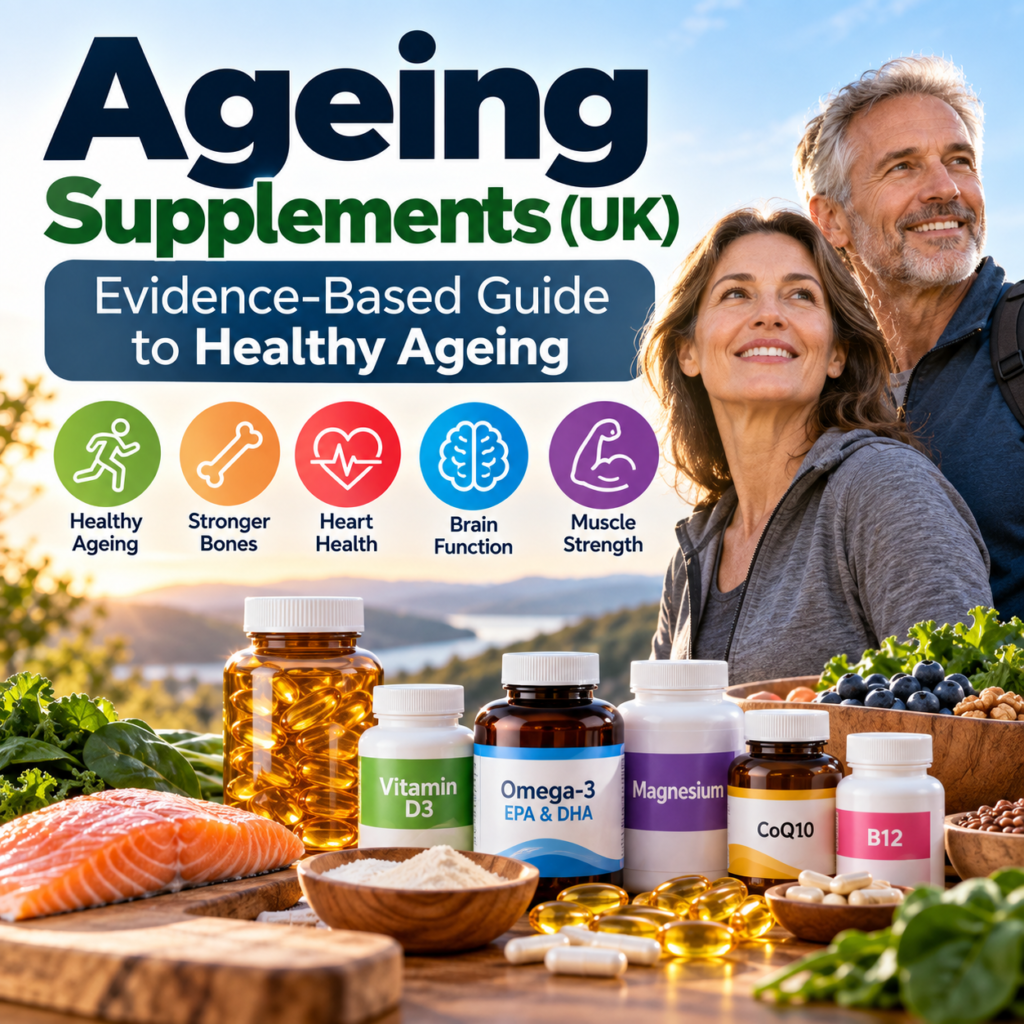
Ageing supplements are vitamins, minerals and other nutrients that people consider as part of a healthy ageing routine. Common examples include vitamin D, omega-3, creatine and vitamin B12, although the evidence and potential benefits differ considerably between ingredients.
This UK guide explores supplements for healthy ageing, what scientific research actually shows, how to assess product quality, and the safety considerations to understand before choosing a supplement. No supplement has been proven to reverse ageing, and a balanced diet, regular physical activity and other healthy habits remain important.

Who this is for (age, lifestyle)
This guide may suit:
UK adults interested in healthy ageing
Adults aged 40+ looking at long-term nutritional support
People interested in longevity supplements
Those wanting to support normal bone, muscle, brain and cardiovascular health
People comparing Vitamin D, omega-3, magnesium, creatine and other supplements
Readers who want to separate evidence-based nutrition from exaggerated anti-ageing claims
This content is for general educational purposes only.
What are ageing supplements?
“Ageing supplements” isn’t a specific medical category.
The term is generally used to describe supplements marketed towards:
Healthy ageing
Longevity
Maintaining physical function
Supporting muscle and bone health
Cognitive health
Cardiovascular health
General nutritional adequacy
Some of these products contain nutrients that are essential for normal body function, such as Vitamin D, magnesium, Vitamin B12 and omega-3 fatty acids.
Others contain compounds marketed specifically for longevity, including substances such as CoQ10, creatine, curcumin and certain polyphenols.
The evidence varies considerably between them.
The important distinction
A nutrient can be important for normal health without being a proven anti-ageing treatment.
For example, Vitamin D is important for normal bones and muscle function. That doesn’t mean taking large amounts of Vitamin D will slow biological ageing.
This distinction is particularly important when evaluating longevity products.
Which supplements are most relevant to healthy ageing?
There isn’t one supplement that covers every aspect of ageing.
Instead, different nutrients have different roles.
Some of the most relevant categories include:
Vitamin D
Omega-3
Magnesium
Creatine
Vitamin B12
Calcium
CoQ10
Protein supplements
Zinc
Vitamin K
The appropriate choice depends on your diet, age, lifestyle and individual nutritional needs.
1. Vitamin D for healthy ageing
Vitamin D becomes particularly relevant as people get older because it contributes to:
Maintenance of normal bones
Normal muscle function
Normal absorption and utilisation of calcium and phosphorus
Normal function of the immune system
The NHS recommends that adults consider taking 10 micrograms (400 IU) of Vitamin D daily during autumn and winter.
Some people may be advised to supplement throughout the year, particularly if they have limited exposure to sunlight.
Why Vitamin D matters as you age
Maintaining adequate Vitamin D is particularly relevant to bone and muscle health.
However, taking very high doses isn’t a shortcut to healthier ageing.
The goal should generally be adequacy rather than maximum dosage.
Browse Vitamin D Supplements on Amazon UK ↗
2. Omega-3 for healthy ageing
Omega-3 is another nutrient frequently included in longevity-focused supplement routines.
The main long-chain omega-3 fatty acids are:
EPA
DHA
DHA contributes to the maintenance of normal brain function and normal vision, while EPA and DHA contribute to the normal function of the heart at the relevant intake.
Omega-3 is therefore particularly interesting when considering healthy ageing because cardiovascular and cognitive health become increasingly important throughout adulthood.
However, omega-3 supplements shouldn’t be described as proven anti-ageing treatments.
Food comes first
UK dietary guidance recommends eating at least two portions of fish per week, including one portion of oily fish.
Oily fish includes:
Salmon
Mackerel
Sardines
Herring
Pilchards
Trout
People who rarely eat oily fish may consider an omega-3 supplement as one way of increasing EPA and DHA intake.
Browse Omega-3 Supplements on Amazon UK ↗
3. Creatine and healthy ageing
Creatine is best known as a sports supplement, but there is growing interest in its potential role in healthy ageing and maintaining muscle function.
Muscle mass and strength naturally become increasingly important as we get older.
Creatine supplementation, particularly when combined with resistance exercise, has been studied extensively for physical performance and muscle-related outcomes.
This makes creatine particularly interesting for adults who are focused on maintaining physical function as they age.
Who might consider creatine?
Creatine may be particularly relevant to:
Adults participating in resistance training
People looking to maintain muscle mass
Older adults interested in physical function
People whose dietary creatine intake is relatively low
However, creatine isn’t a proven “anti-ageing” supplement.
Its potential value is more closely related to muscle, strength and physical performance.
Browse Creatine Supplements on Amazon UK ↗
4. Magnesium for healthy ageing
Magnesium is an essential mineral involved in numerous processes throughout the body.
It contributes to:
Normal muscle function
Normal functioning of the nervous system
Normal psychological function
Maintenance of normal bones
Reduction of tiredness and fatigue
Normal energy-yielding metabolism
Magnesium intake can therefore be relevant at any age.
However, magnesium shouldn’t be viewed as an anti-ageing treatment.
Magnesium forms
Common supplement forms include:
Magnesium glycinate
Magnesium citrate
Magnesium oxide
Magnesium malate
Magnesium L-threonate
The amount of elemental magnesium is more useful when comparing products than the total weight of the magnesium compound.
Browse Magnesium Supplements on Amazon UK ↗
5. Vitamin B12 and ageing
Vitamin B12 deserves particular attention as people get older.
Vitamin B12 contributes to:
Normal red blood cell formation
Normal functioning of the nervous system
Normal psychological function
Reduction of tiredness and fatigue
Normal energy-yielding metabolism
Vitamin B12 is found naturally mainly in animal-derived foods.
Some people may have difficulty absorbing B12 from food, making nutritional status particularly important.
Who may need particular attention to B12?
This can include people who:
Follow a vegan diet
Have certain gastrointestinal conditions
Take certain medicines
Have been advised they have low B12 levels
Rather than automatically taking high-dose B12 because of age alone, it is sensible to consider dietary intake and individual circumstances.
Browse Vitamin B12 Supplements on Amazon UK ↗
6. CoQ10 and healthy ageing
Coenzyme Q10 (CoQ10) is a naturally occurring compound involved in cellular energy production.
CoQ10 levels and supplementation have attracted interest in relation to:
Energy metabolism
Cardiovascular health
Exercise
Healthy ageing
However, the evidence for taking CoQ10 specifically to extend lifespan or slow ageing remains insufficient to describe it as a proven longevity supplement.
CoQ10 may nevertheless be an interesting ingredient to investigate, particularly for people taking certain medications or those considering it for a specific reason.
Anyone taking prescription medication should speak with a healthcare professional before adding CoQ10.
Browse CoQ10 Supplements on Amazon UK ↗
7. Calcium and bone health
Bone health becomes increasingly important with age.
Calcium is essential for maintaining normal bones and teeth, but that doesn’t mean everyone needs a calcium supplement.
Good dietary sources include:
Milk
Yogurt
Cheese
Fortified plant drinks
Some leafy green vegetables
Calcium-set tofu
Vitamin D also plays an important role in calcium absorption and bone health.
Should everyone take calcium?
No.
If your diet already provides sufficient calcium, supplementation may not be necessary.
People at increased risk of osteoporosis or fractures should discuss their individual nutritional requirements with a healthcare professional.
8. Protein and healthy ageing
Protein isn’t usually described as a “longevity supplement”, but it may be one of the most practical nutritional considerations as we age.
Maintaining adequate protein intake is important for supporting muscle maintenance, particularly when combined with resistance exercise.
Protein can come from:
Eggs
Fish
Meat
Dairy
Beans
Lentils
Tofu
Soy products
Nuts and seeds
Protein powders can be convenient, but they are simply a convenient food source rather than a special anti-ageing treatment.
Browse Protein Supplements on Amazon UK ↗
Ageing supplements: what does the evidence look like?
Not all longevity ingredients have the same level of evidence.
| Supplement / Nutrient | Main area of interest | Evidence perspective | Typical reason to consider it |
|---|---|---|---|
| Vitamin D | Bone & muscle health | Strong role in normal nutrition | Low intake / limited sunlight |
| Omega-3 | Heart & brain | Established physiological roles; supplement outcomes vary | Low oily-fish intake |
| Creatine | Muscle & physical performance | Strong evidence for exercise-related benefits | Strength & muscle support |
| Magnesium | Muscle, nerves & bones | Essential nutrient with established functions | Low intake / dietary gaps |
| Vitamin B12 | Nervous system & blood | Essential nutrient | Vegan diet / deficiency risk |
| Calcium | Bones & teeth | Essential nutrient | Inadequate dietary intake |
| CoQ10 | Cellular energy | Interesting but less established for longevity | Specific supplementation interest |
| Protein | Muscle maintenance | Strong nutritional rationale | Inadequate protein intake |
The key point is that nutritional adequacy is generally better supported than claims that a supplement can extend lifespan.
Which ageing supplements should you actually consider?
Rather than starting with a long list of supplements, consider these questions.
1. What does your diet already provide?
If you eat oily fish, dairy or fortified alternatives, plenty of protein and a varied diet, you may already be getting many important nutrients.
2. Do you have a known deficiency?
If blood tests or a healthcare professional have identified a deficiency, correcting it should take priority.
3. Are you getting enough protein?
Maintaining muscle becomes increasingly important with age.
4. Are you exercising?
Resistance training is particularly important for maintaining muscle strength and physical function.
5. Do you have a specific dietary restriction?
Vegan diets, for example, require particular attention to nutrients such as B12.
A simple healthy-ageing supplement strategy
You don’t necessarily need a cupboard full of supplements.
A sensible approach could look like this:
Foundation
Balanced diet + regular exercise + adequate protein + good sleep
↓
Check nutritional gaps
Consider your diet, lifestyle and individual circumstances.
↓
Correct deficiencies
Use supplements where there is a genuine nutritional reason.
↓
Add targeted supplements where appropriate
For example, Vitamin D, omega-3 or creatine may be relevant depending on your diet and goals.
↓
Avoid unnecessary high doses
More isn’t automatically better.
What about “anti-ageing” supplements?
This is where caution is particularly important.
You will find products marketed around compounds such as:
Resveratrol
NMN
NAD-related supplements
Alpha-lipoic acid
Quercetin
Spermidine
Curcumin
Fisetin
Many of these compounds are scientifically interesting and are being studied in relation to ageing biology.
But interesting research is not the same as proven lifespan extension in humans.
Some evidence comes from:
Cell studies
Animal studies
Mechanistic research
Small human studies
It is therefore too early to conclude that taking these compounds will make a healthy person live longer.
This distinction is especially important when products are marketed using phrases such as “reverses ageing”, “extends lifespan” or “cellular rejuvenation”.
Best ageing supplements by goal
| Goal | Nutrients worth considering | Why they may be relevant | Amazon UK |
|---|---|---|---|
| Bone health | Vitamin D, calcium | Normal bones and calcium metabolism | View ↗ |
| Muscle & strength | Protein, creatine, Vitamin D | Muscle maintenance and physical performance | View ↗ |
| Brain health | Omega-3, Vitamin B12 | DHA contributes to normal brain function; B12 supports normal nervous-system function | View ↗ |
| Heart health | Omega-3 | EPA and DHA contribute to normal heart function | View ↗ |
| Nutritional adequacy | Multivitamin/mineral | May help fill specific dietary gaps | View ↗ |
| Magnesium intake | Magnesium glycinate/citrate | Supports normal muscle and nervous-system function | View ↗ |
| B12 intake | Vitamin B12 | Important for nervous-system function and red blood cell formation | View ↗ |
These are nutritional categories rather than recommendations that everyone should take these supplements.
Pros & cons of omega-3 supplements
Pros
Can help correct nutritional deficiencies
May be useful when dietary intake is limited
Some nutrients have well-established roles in normal health
Convenient for people with specific dietary requirements
Can complement a healthy diet and exercise routine
Cons
No supplement has been proven to stop ageing
Many “longevity” claims are based on preliminary research
High doses can cause adverse effects
Supplements can interact with medicines
Taking multiple products can result in unnecessary duplication
Supplements cannot replace exercise, sleep or a balanced diet
Dosage & safety (UK)
There isn’t one universal ageing supplement dosage.
The appropriate amount depends entirely on the nutrient.
For example:
Vitamin D has specific UK guidance.
Omega-3 intake depends partly on dietary fish consumption.
Creatine is generally discussed in relation to muscle and exercise.
Magnesium supplementation should take account of the amount of elemental magnesium.
B12 requirements vary depending on diet and absorption.
Avoid taking multiple products containing the same nutrient without checking the labels.
This is particularly important with:
Vitamin D
Vitamin A
Zinc
Selenium
Iron
Magnesium
People taking prescription medicines or managing a medical condition should speak with a GP or pharmacist before starting new supplements.
Frequently Asked Questions
What are the best supplements for ageing?
There isn’t one scientifically established “best” ageing supplement. Nutrients such as Vitamin D, omega-3, magnesium, B12 and creatine may be relevant to different aspects of healthy ageing, but suitability depends on diet and individual circumstances.
Can supplements slow ageing?
There is currently no supplement that can be reliably described as a proven treatment for biological ageing or as a way to extend human lifespan.
Should people over 50 take supplements?
Not everyone over 50 needs the same supplements. Dietary intake, lifestyle, medication use and individual nutritional status should be considered. Some people may benefit from specific nutrients, while others may obtain everything they need from food.
Is Vitamin D important as you age?
Yes. Vitamin D contributes to normal bones and normal muscle function. The NHS recommends that adults consider taking 10 micrograms of Vitamin D daily during autumn and winter, with year-round supplementation relevant to some people.
Is omega-3 good for healthy ageing?
Omega-3 fatty acids have established roles in normal health. DHA contributes to normal brain function, while EPA and DHA contribute to normal heart function. However, omega-3 should not be described as a proven anti-ageing treatment.
Is creatine good for older adults?
Creatine has strong evidence for supporting high-intensity exercise performance and has been studied in combination with resistance training for muscle and strength. This makes it an interesting option for maintaining physical function as people age.
What supplements should I avoid?
Avoid unnecessary high-dose supplementation and products making exaggerated claims about reversing ageing or extending lifespan. Check for potential interactions with medicines and avoid duplicating the same nutrients across multiple products.
Final thoughts
Ageing is a normal biological process, and no supplement can currently be described as a proven way to stop or reverse it.
A more evidence-based approach is to focus on the things that have clear relevance to healthy ageing: maintaining muscle and bone health, eating a varied diet, getting enough protein, staying physically active, sleeping well and correcting genuine nutritional deficiencies.
Supplements can have a role when there is a dietary gap or a specific nutritional reason for taking them.
Among the nutrients worth considering are Vitamin D, omega-3, magnesium, Vitamin B12 and creatine, although they serve very different purposes.
If you’re shopping for ageing or longevity supplements, look beyond the words “anti-ageing” on the label. Check the ingredient, dose, evidence, safety profile and whether you actually have a reason to take it.
👉 Browse Ageing Supplements on Amazon UK ↗
Medical Disclaimer
This article is for general educational purposes only and is not medical advice. Supplements aren’t a substitute for a varied diet, healthy lifestyle or appropriate medical care. Speak with a GP, pharmacist or qualified healthcare professional before starting supplements if you have a medical condition, take medication, are pregnant or breastfeeding, or have been advised that you have a nutritional deficiency.