 Skip to content
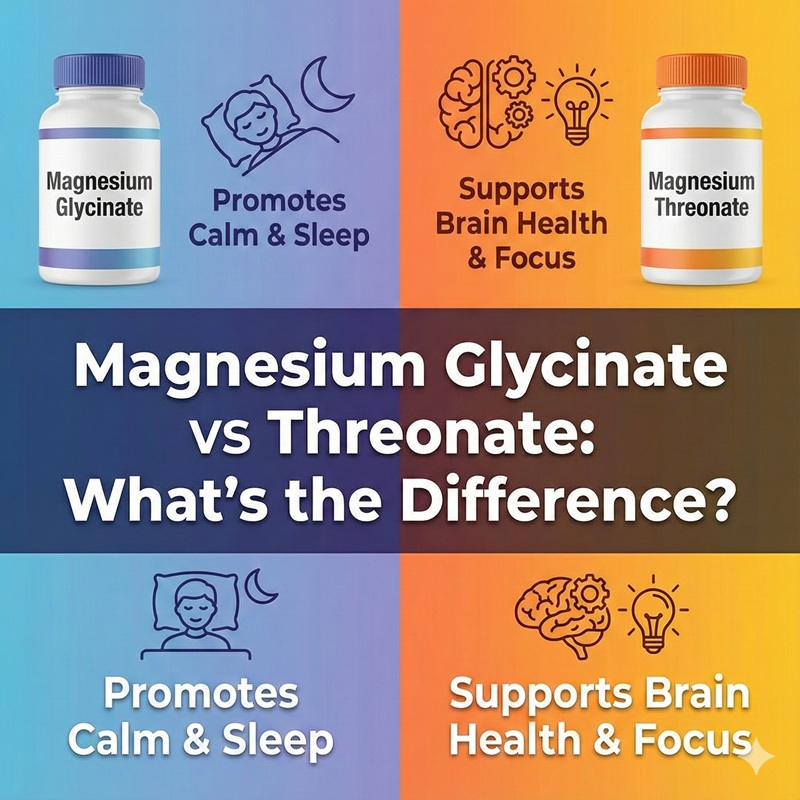
Magnesium supplements come in several forms, which can make choosing between them confusing. Two of the most commonly compared options are magnesium glycinate and magnesium threonate, both widely available in the UK.
People often look into these forms when they want something that fits into an evening routine, particularly if relaxation or tolerability is a priority. However, the differences between them aren’t always clearly explained.
This article breaks down how magnesium glycinate and magnesium threonate differ, how each is commonly used, what evidence exists, and how to decide which may be more suitable — without overstating benefits.

Who this is for
This article is written for:
UK adults aged 30–65
People interested in magnesium as part of a sleep or evening routine
Those comparing different magnesium forms before buying
Readers who want clear, evidence-based explanations, not marketing claims
This is not intended for diagnosing or treating medical conditions.
What magnesium glycinate and threonate do (neutral explanation)
Both magnesium glycinate and magnesium threonate provide magnesium, an essential mineral that contributes to normal muscle and nervous system function.
The difference lies in what magnesium is bound to, which can affect:
tolerability
how it’s absorbed
why people choose one form over another
Neither form is inherently “better” for everyone.
Evidence overview (NHS / EFSA / PubMed)
NHS overview
The NHS states that magnesium is required for normal muscle and nerve function, energy release, and maintaining normal physiological processes. Most people can obtain sufficient magnesium from a balanced diet, and supplements should be used cautiously and within recommended intake levels.
Source:
https://www.nhs.uk/conditions/vitamins-and-minerals/others/
EFSA overview
The European Food Safety Authority (EFSA) has assessed magnesium intake and notes that excessive intake from supplemental magnesium may cause digestive effects in some individuals. EFSA guidance supports the importance of appropriate dosage and form.
Source:
https://www.efsa.europa.eu/en/efsajournal/pub/4186
Research context (high level)
Peer-reviewed research has explored different magnesium compounds and how they behave in the body. Magnesium glycinate is often discussed in relation to tolerability, while magnesium threonate has been studied more in the context of cognitive research. However, outcomes vary and evidence does not support definitive superiority for sleep.
Best product options (comparison table)
| Feature | Magnesium Glycinate | Magnesium Threonate |
|---|---|---|
| Magnesium form | Bound to glycine (amino acid) | Bound to threonic acid |
| Typical use | Relaxation, evening routines | Cognitive-focused discussions |
| Tolerability | Often described as gentle | Generally well tolerated |
| Price range | Moderate | Higher |
| UK availability | Widely available | More limited |
| Amazon option | Amazon UK ↗ | Amazon UK ↗ |
Important notes:
Always check the label for elemental magnesium content
Formulations and dosages can change
Individual suitability varies
Pros & cons
Magnesium glycinate – pros
Widely available in the UK
Generally well tolerated
Often chosen for evening use
More affordable
Magnesium glycinate – cons
Lower elemental magnesium per capsule in some products
Quality varies by brand
Magnesium threonate – pros
Popular in cognitive-focused discussions
Often taken in smaller doses
Usually combined with clear labelling
Magnesium threonate – cons
Higher price point
Fewer UK brands available
Not specifically proven to be better for sleep
Dosage & safety (UK guidance)
Magnesium supplements sold in the UK typically provide 100–400 mg of elemental magnesium per day, depending on the product and form.
Important considerations:
Always check elemental magnesium, not just compound weight
Follow manufacturer instructions
Do not exceed recommended intake without professional advice
EFSA notes that higher supplemental doses may cause digestive discomfort in some individuals, particularly with certain forms.
Where to buy magnesium glycinate and threonate (UK)
Both forms are available on Amazon UK
Frequently Asked Questions
Is magnesium glycinate better than threonate for sleep?
There is no clear evidence that one form is better for sleep for everyone. Magnesium glycinate is often chosen for evening routines due to tolerability, while magnesium threonate is more commonly discussed in cognitive contexts.
Can you take magnesium glycinate and threonate together?
Some products combine different forms of magnesium. However, total elemental magnesium intake should always be considered, and combining supplements should be approached cautiously.
Why is magnesium threonate more expensive?
Magnesium threonate is more complex to manufacture and is often marketed as a premium product, which contributes to its higher cost.
Which form is better for beginners?
Many beginners start with magnesium glycinate due to availability, price, and tolerability. Individual response varies.
Final thoughts
Magnesium glycinate and magnesium threonate both provide magnesium, but they are often chosen for different reasons. Glycinate is typically selected for general use and evening routines, while threonate is more often discussed in cognitive-focused contexts.
Neither form is universally better — the right choice depends on individual preference, budget, and how the supplement fits into a wider routine.
Sources & references
NHS – Vitamins and minerals guidance
https://www.nhs.uk/conditions/vitamins-and-minerals/European Food Safety Authority (EFSA) – Magnesium dietary reference values
https://www.efsa.europa.eu/Peer-reviewed nutrition research summaries
