 Skip to content
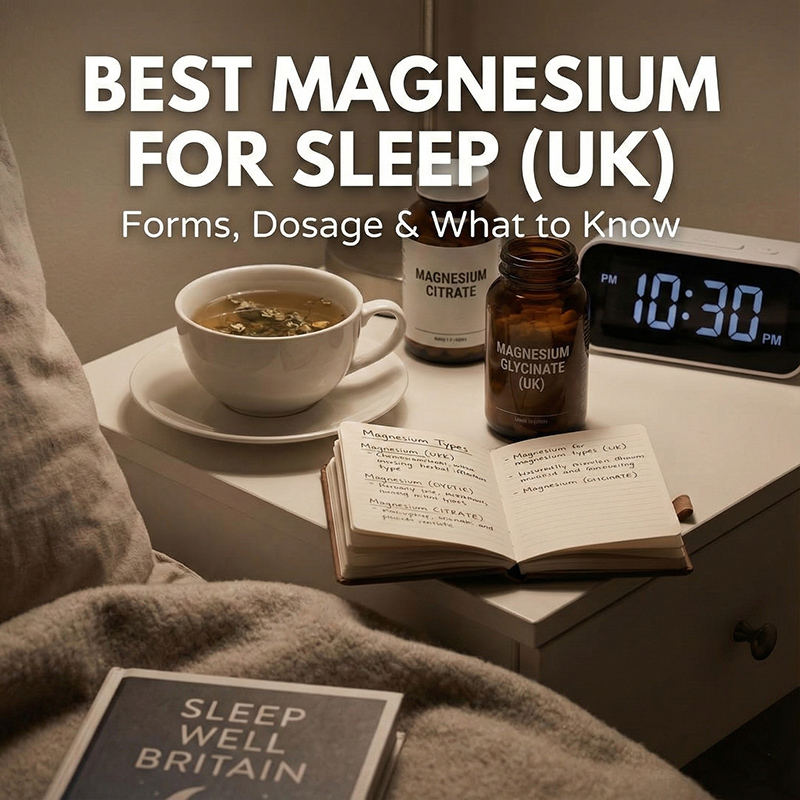
Magnesium is one of the most commonly discussed supplements in relation to relaxation and sleep routines in the UK. It contributes to normal muscle and nervous system function, which is why many people explore magnesium as part of their evening wind-down.
For some, the challenge isn’t falling asleep instantly, but switching off mentally at the end of the day. If stress, screen time, or an irregular routine make it harder to relax at night, you’re not alone.
This guide explains the different forms of magnesium available in the UK, how they’re commonly used in relation to sleep, typical dosage considerations, and what NHS and EFSA guidance says without hype or medical claims.

What is magnesium?
Magnesium is an essential mineral involved in hundreds of processes in the body, including:
normal muscle function
nervous system signalling
energy metabolism
It is naturally present in foods such as leafy green vegetables, nuts, seeds, whole grains, and legumes.
NHS guidance on magnesium
According to the NHS, magnesium is required for normal muscle and nerve function, helps maintain steady heart rhythm, and supports energy release from food. The NHS notes that most people can obtain sufficient magnesium from a balanced diet and that supplements should be used cautiously and within recommended intake levels.
👉 www.nhs.uk/conditions/vitamins-and-minerals/others/
Some people explore magnesium supplements when dietary intake may be low or when looking to support relaxation as part of an evening routine.
How magnesium is discussed in relation to sleep
Magnesium is often mentioned in conversations around sleep because of its association with:
muscle relaxation
nervous system regulation
evening wind-down routines
For this reason, it is commonly taken later in the day. However, individual responses vary, and magnesium is not a guaranteed solution for sleep problems.
👉 Related: You may also want to read our guide on Best sleep supplements (UK) for a broader overview.
Common forms of magnesium for sleep
Not all magnesium supplements are the same. The form used can influence tolerability and why people choose it.
Magnesium glycinate
Magnesium bound to the amino acid glycine
Often described as gentle and well tolerated
Commonly chosen for evening use
Magnesium threonate
Bound to threonic acid
Often discussed in relation to cognitive health
Typically more expensive
Magnesium citrate
Widely available and affordable
Can have digestive effects for some people
Not always preferred for night-time use
👉 Related: Read our detailed comparison of magnesium glycinate vs threonate.
Which magnesium is best for sleep?
There is no single magnesium supplement that is best for sleep for everyone.
In the UK, magnesium glycinate is often chosen by people interested in sleep-related routines because it is generally well tolerated and widely available. The best option can vary depending on dosage, timing, and individual sensitivity.
The most commonly discussed magnesium forms for sleep in the UK include:
Magnesium glycinate
Magnesium threonate
Magnesium citrate
When should you take magnesium for sleep?
Magnesium is commonly taken in the evening, often with or after food.
Many people include it as part of a wind-down routine around 1–2 hours before bed, although timing can vary depending on the product and individual response.
Typical magnesium dosage (UK context)
Magnesium supplements in the UK typically provide between 100 mg and 400 mg per serving, depending on the form and product.
Always check:
the amount of elemental magnesium listed on the label
serving size
manufacturer instructions
EFSA guidance on magnesium intake
The European Food Safety Authority (EFSA) has assessed magnesium intake from supplements and notes that excessive intake from supplemental magnesium may cause digestive effects such as diarrhoea in some individuals. This is why dosage and form are important considerations.
Source:
👉 https://www.efsa.europa.eu/en/efsajournal/pub/4186
Do not exceed recommended intake levels without professional advice.


How to choose a quality magnesium supplement (UK)
When comparing magnesium supplements available in the UK, consider:
Clearly stated magnesium form (e.g. glycinate, citrate)
Transparent elemental magnesium dosage
UK or EU manufacturing standards
Minimal unnecessary additives or fillers
👉 Related: See our overview of best sleep supplements in the UK for alternatives commonly discussed alongside magnesium.
Magnesium Supplements for Sleep (UK): Comparison
| Product | Magnesium Form | Elemental Magnesium | Pros | Cons | Where to Buy |
|---|---|---|---|---|---|
| British Supplements Magnesium | Glycinate | 100–200 mg | Clean formulation, no fillers, UK-made | Lower dose per capsule | Amazon UK ↗ |
| Heights Magnesium | Glycinate blend | ~200 mg | Premium positioning, subscription option | Higher price point | Amazon UK ↗ |
| Bulk™ Magnesium Glycinate | Glycinate | Varies | Good value, widely available | Packaging less premium | Amazon UK ↗ |
| Holland & Barrett Magnesium | Glycinate / Citrate | Varies | Easy to buy in-store or online | Form quality varies | Amazon UK ↗ |
| Magnesium Glycinate (Various Brands) | Glycinate | Varies by brand | Wide choice, fast delivery | Quality varies | Amazon UK ↗ |
Important notes:
Always check the label for elemental magnesium content
Formulations and dosages can change
Individual suitability varies
Where to buy magnesium supplements in the UK
Magnesium supplements are widely available on Amazon UK
Frequently Asked Questions
Which type of magnesium is best for sleep?
There is no single type of magnesium that works best for everyone. In the UK, magnesium glycinate is often chosen by people interested in sleep-related routines because it is generally well tolerated. Individual response can vary depending on dosage, timing, and personal sensitivity.
When is the best time to take magnesium for sleep?
Magnesium is commonly taken in the evening, often with or after food. Some people include it as part of a wind-down routine before bed. Timing may vary depending on the specific product and individual response.
How much magnesium should I take?
Magnesium supplements in the UK commonly range from 100 to 400 mg per serving, depending on the form. It is important to check the amount of elemental magnesium on the label and follow manufacturer guidance or professional advice.
Is magnesium safe to take every day?
Magnesium is an essential mineral, but supplementation should be approached carefully. Daily use may be suitable for some people, but anyone with health conditions or concerns should consult a qualified healthcare professional before supplementing.
Can magnesium cause side effects?
Some forms of magnesium may cause digestive discomfort in certain individuals, particularly at higher doses. Choosing a well-tolerated form and starting with a lower dose may help reduce this risk.
Final thoughts
Magnesium is one of the most widely discussed supplements in relation to relaxation and sleep quality. While it may be a helpful addition to an evening routine for some people, results vary and it is not a guaranteed solution.
Understanding the different forms, dosages, and UK-available options can help you make a more informed decision.
Sources & references
NHS – Vitamins and minerals:
https://www.nhs.uk/conditions/vitamins-and-minerals/others/European Food Safety Authority (EFSA) – Dietary reference values for magnesium:
https://www.efsa.europa.eu/en/efsajournal/pub/4186UK supplement labelling and nutrition standards
